WHERE CURIOSITY BEGINS
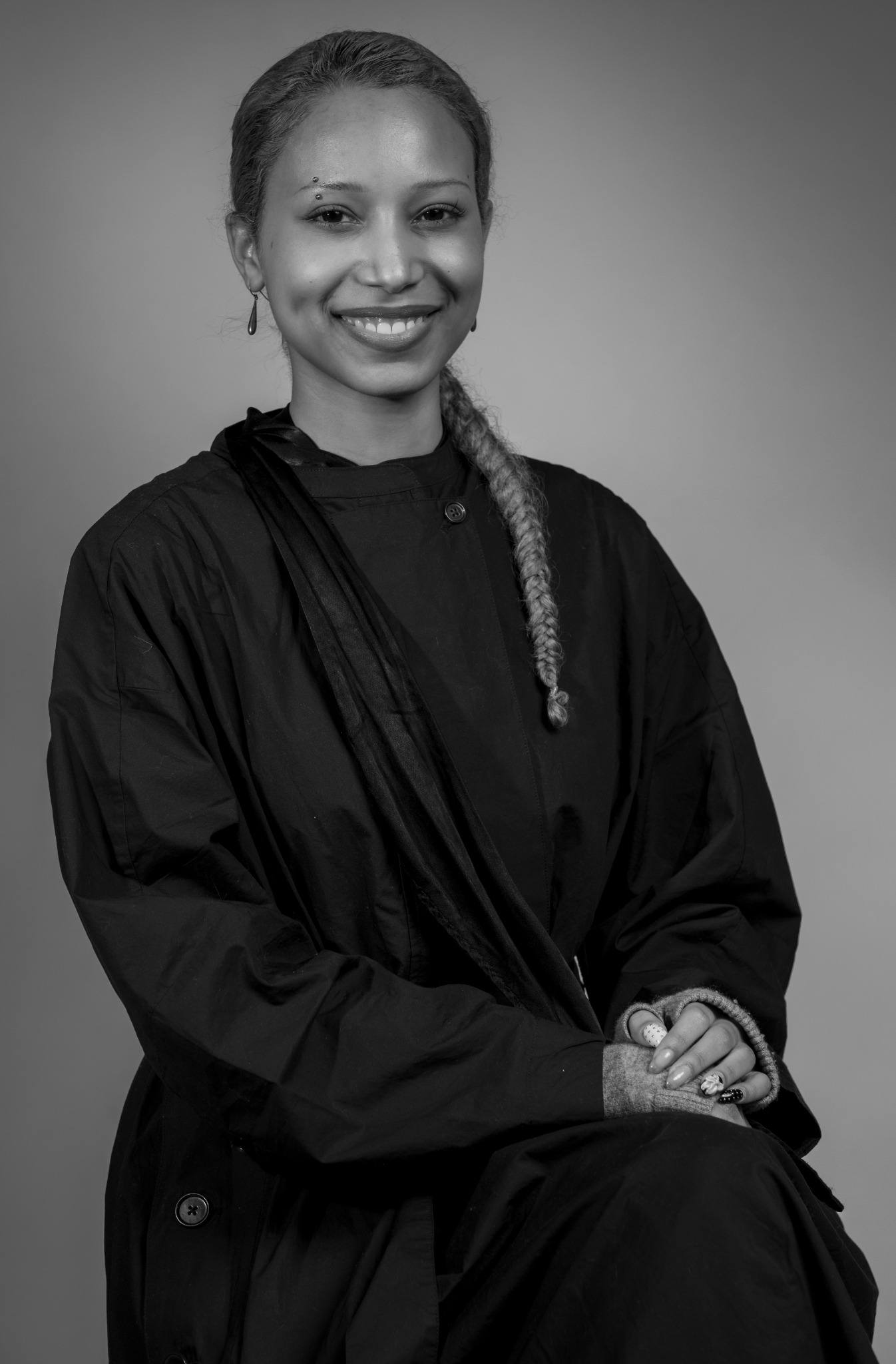
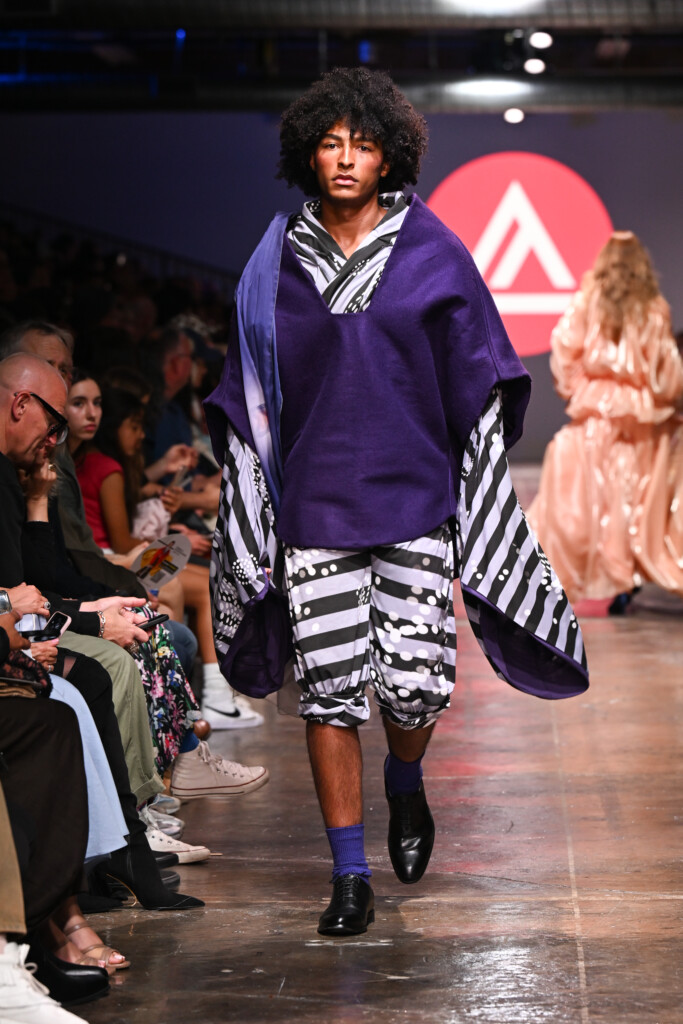
Growing up, Simone was conditioned to assimilate, quietly denying her West African roots to fit in. Her mother resisted—wearing bejeweled embellishments on her white coat to work—reconditioning Simone to be unapologetically herself. This collection draws from that quiet resistance, honoring ancestry through West African motifs and silhouettes. Her thesis centers on generational intent and the act of standing out within a preconceived environment. It is an ode to her mother’s personhood and to a history not taught in school: her own.
The collection began with a single image of her great-grandmother in traditional garments, posed for a portrait. For newly independent West Africans, portraiture became a means of reclaiming humanity taken during French colonization. Photographing West Africans by West Africans, for a non-Eurocentric audience, allowed communities to rediscover identity. No longer “sujets,” they reembraced their likeness as autonomous people.
“I kany¨ tan”—a Malian phrase translating to “You Look Beautiful Like That”—titles a portraiture book featuring Seydou Keïta and Malick Sidibé, whose work became central to Simone’s thesis. These Malian artists documented their communities around Mali’s 1960 independence. While studying these portraits, Simone realized how little she knew of West African motifs. She questioned the repeating pattern on her great-grandmother’s gown, traditionally known as a boubou
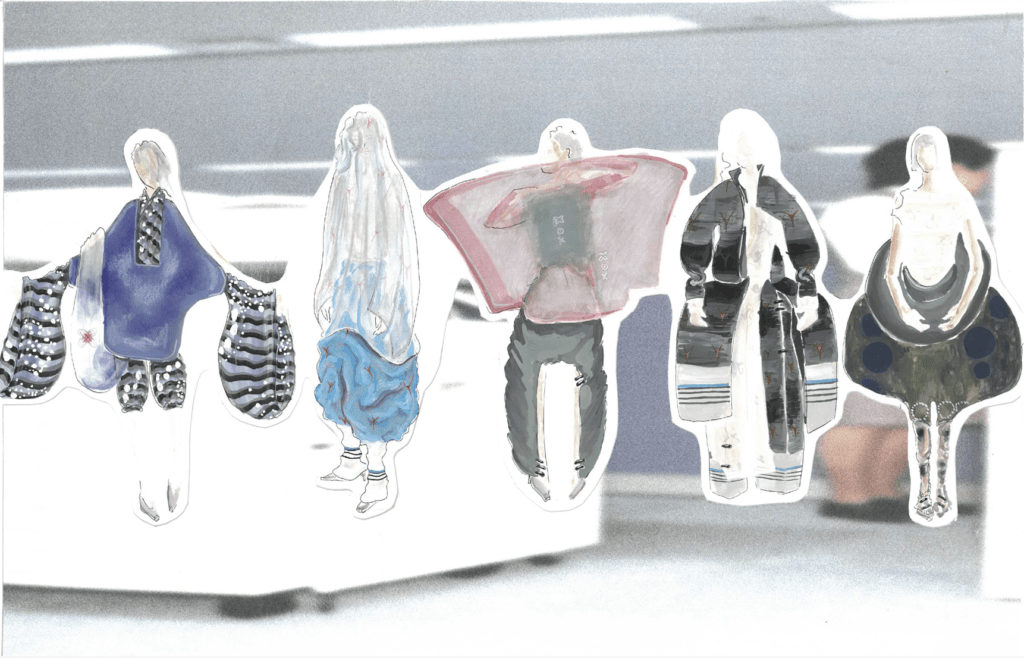
“I really just want people to explore themselves,” she says. “I don’t necessarily want it to be interpreted, but if it were, I would hope it comes with curiosity and appreciation. This is educational—I want people to see something they haven’t seen before.”
That curiosity guided her research into West African textiles, traditional garments, cowrie shell currencies, and native flowers. The result is a body of work rooted in distant pasts, with a color story reflecting both her life and her mother’s—a fusion of life lived and life lost.
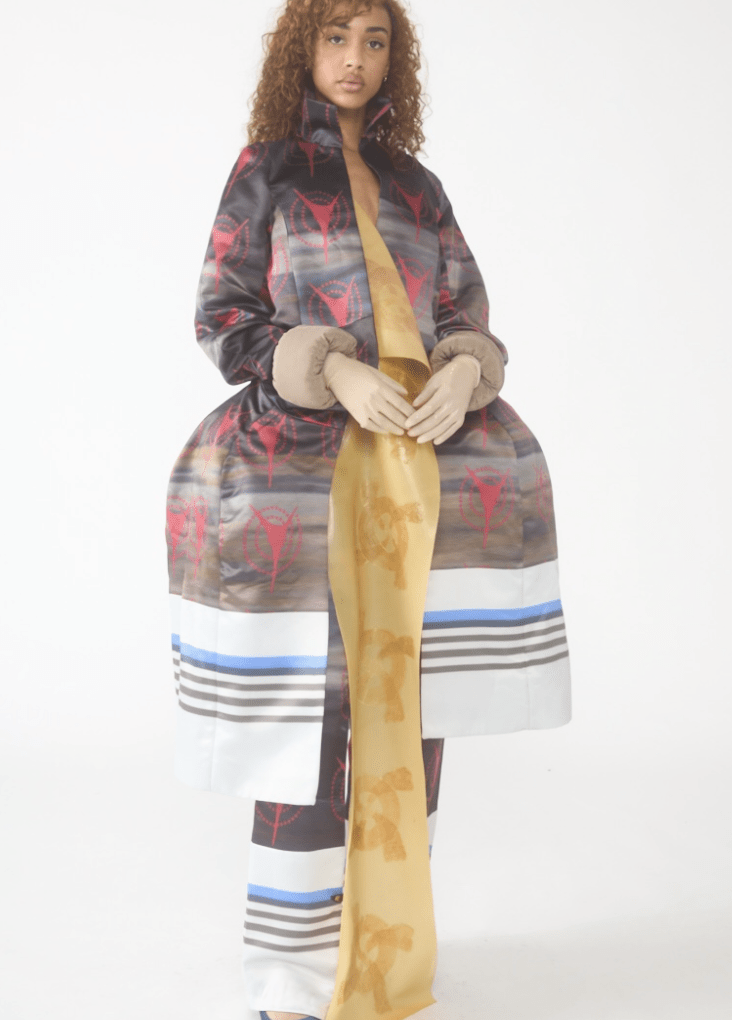
Material selection became both concept and challenge. Latex, a nod to her mother’s medical career, proved difficult to source and manipulate as draping fabric. Once obtained, Simone layered Igbo Uli symbols by hand, referencing her mother’s Nigerian heritage. The resulting visual language merges otutu (dots) and isi oji (head of a kola nut). Dots signify pathways, spiritual connections, and aesthetic traditions across African textiles and body art, while the kola nut represents unity, hospitality, and blessing.
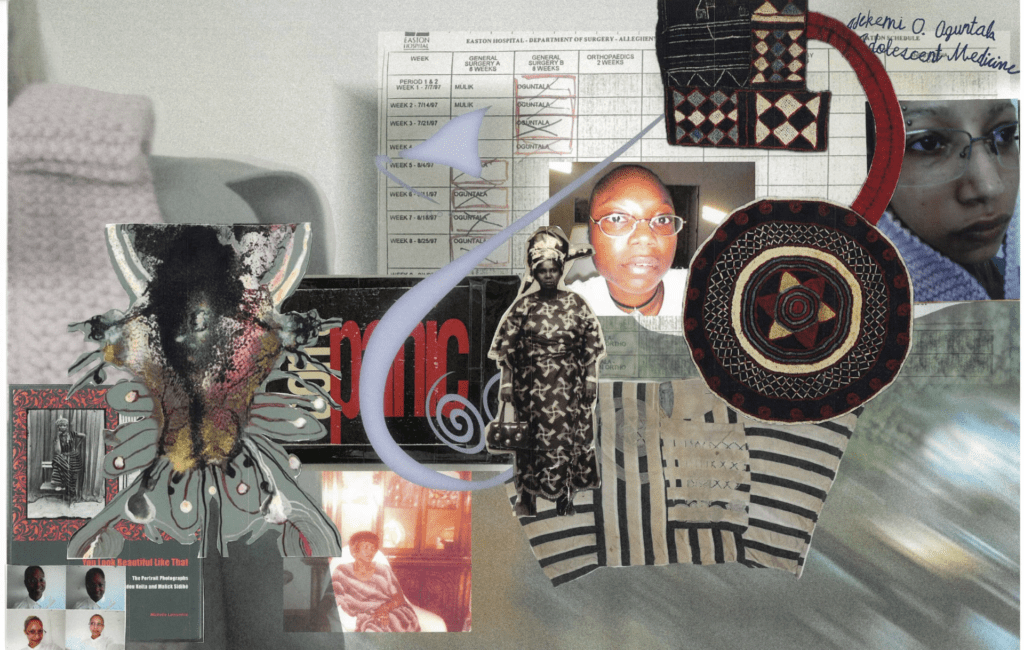
Additional motifs appear throughout, including Adinkra symbols from Ghana and the Geissorhiza Tulbaghensis, a rare flower native to South Africa’s Western Cape. Each reference builds a dense visual archive of West African history.
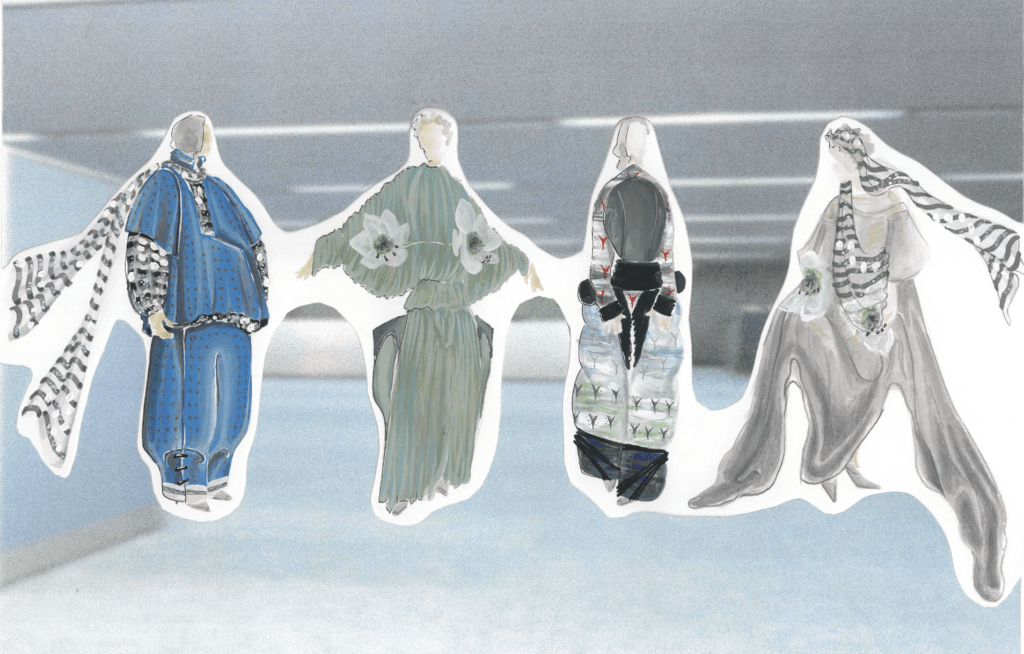
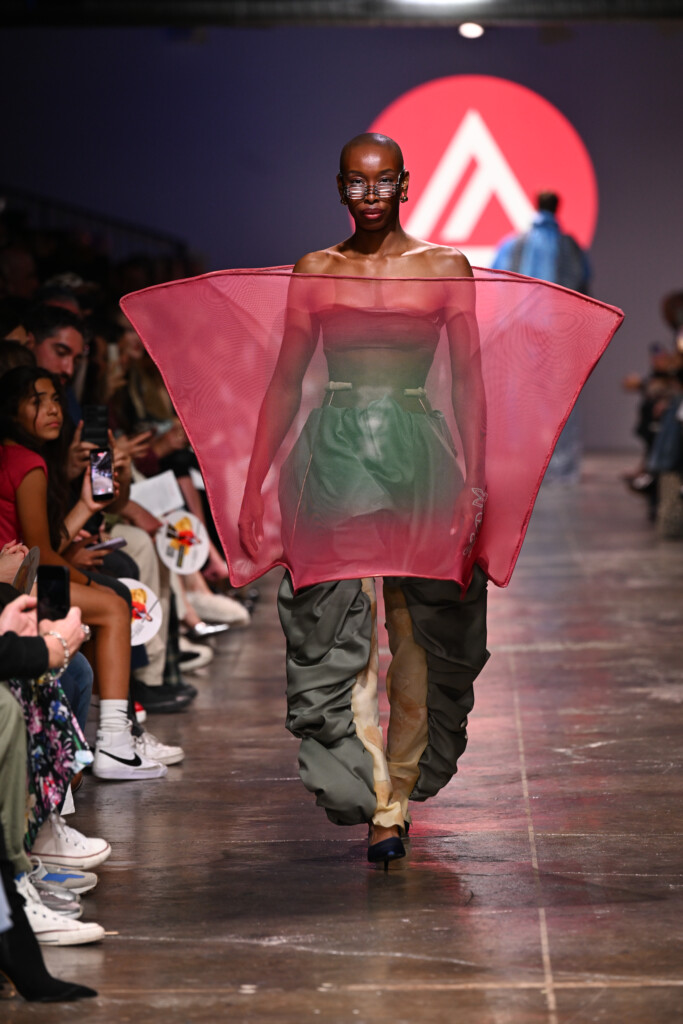
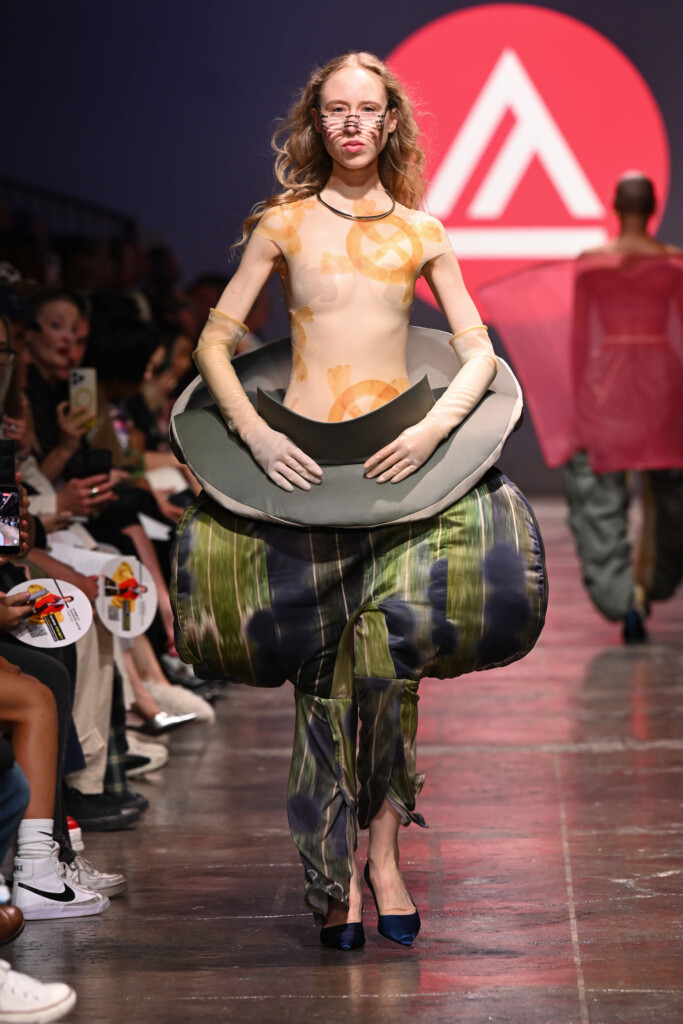
Nine looks form this collection, each a story within a shared chapter. Beneath runway lights, latex silhouettes layered with Uli symbols, Adinkra emblems, and floral forms carry generations forward. What began as a portrait became a search for identity, history, and inheritance. Curiosity, after all, is not where this collection ends. It is where it begins.
Words by AJ Fortney, BA Fashion Journalism
Runway photography by Ed Jay.