REWRITING FASHION HISTORY, ONE THREAD AT A TIME

Michal Rezoni approaches fashion as a system to be dismantled and rebuilt, thread by thread. A multidisciplinary designer, her work bridges fashion history, material innovation, and cultural storytelling, shaped by a background in embroidery, building construction, and real estate development. Across these fields, she has remained focused on one question: how value is assigned, and how it can be reimagined and how to address the issue with environmental impact of the industry.
As an MFA Fashion Design student at the Academy of Art University, Michal’s thesis, Iconic Threads Reimagined, reconstructs historically significant garments from the 1870s to the 1970s using repurposed denim and reclaimed silk. Rather than treating sustainability as aesthetic, she positions it as method. “Sustainability is not merely an ethical responsibility,” she explains, “but a critical design strategy capable of reframing fashion history and expanding the discourse of contemporary luxury.”
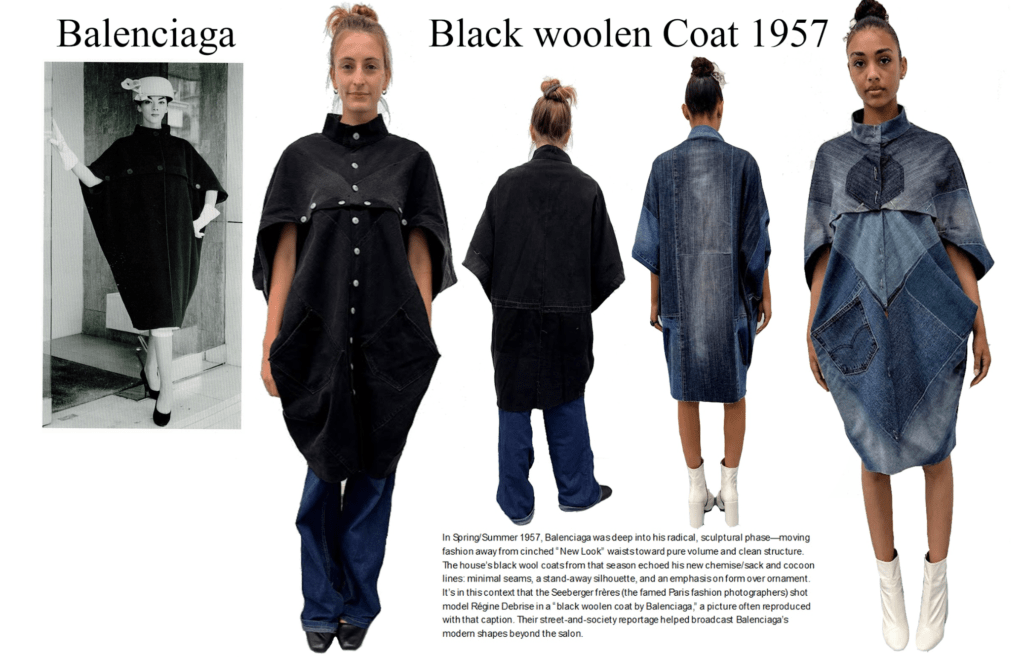
Her process moves through historical analysis, pattern deconstruction, and material experimentation. Iconic silhouettes—from Charles James’ sculptural “Clover Leaf” Dress to Yves Saint Laurent’s Mondrian Dress and Claire McCardell’s utilitarian Popover—are not replicated but reinterpreted. Denim, a workwear textile, combined with silk, replaces traditional luxury fabrics, shifting the conversation around hierarchy, labor, and consumption. “By reconstructing historically coded luxury silhouettes in discarded materials,” Michal notes, “I am interrogating the systems that define value in fashion.”
The collection becomes a dialogue between past and present, where structure and proportion are preserved, yet materials tell a different story. Each garment carries the tension of transformation—heritage recast through reuse, craftsmanship meeting constraint.
Her inquiry extends beyond the runway. During the development of her thesis, Michal authored and illustrated Miri and Jade’s New Clothes, a children’s book introducing textile waste, reuse, and creative transformation. “Sustainability in fashion cannot remain a conversation confined to academia, museums, or the runway,” she says. “The environmental consequences of our industry will be inherited by a younger generation that did not create this crisis.”
Through this dual practice, Michal connects historical scholarship with cultural education. The garments interrogate fashion’s past through material reconstruction; the book invites future generations to rethink consumption. Together, they form a practice grounded in responsibility, inquiry, and long-term environmental awareness—where every thread carries both memory and possibility.
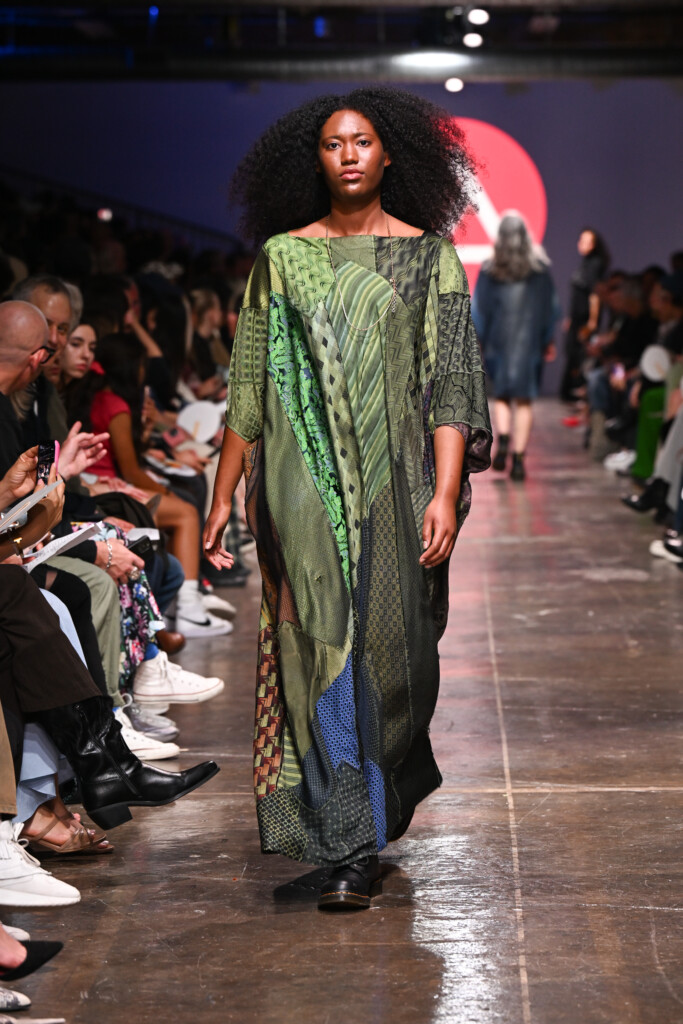
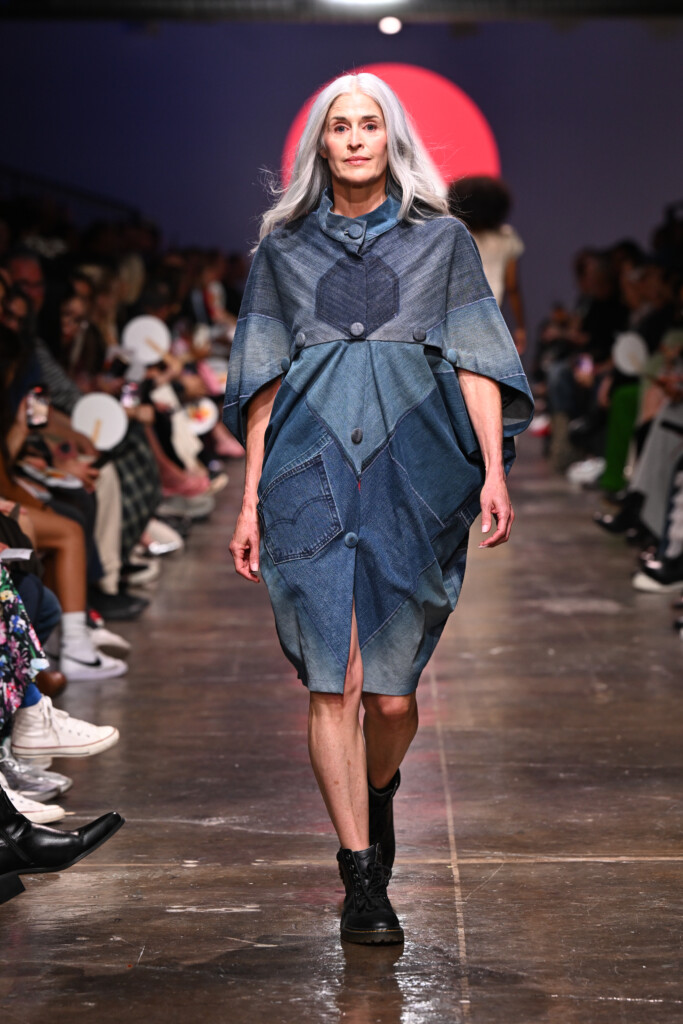
Runway photography by Ed Jay.